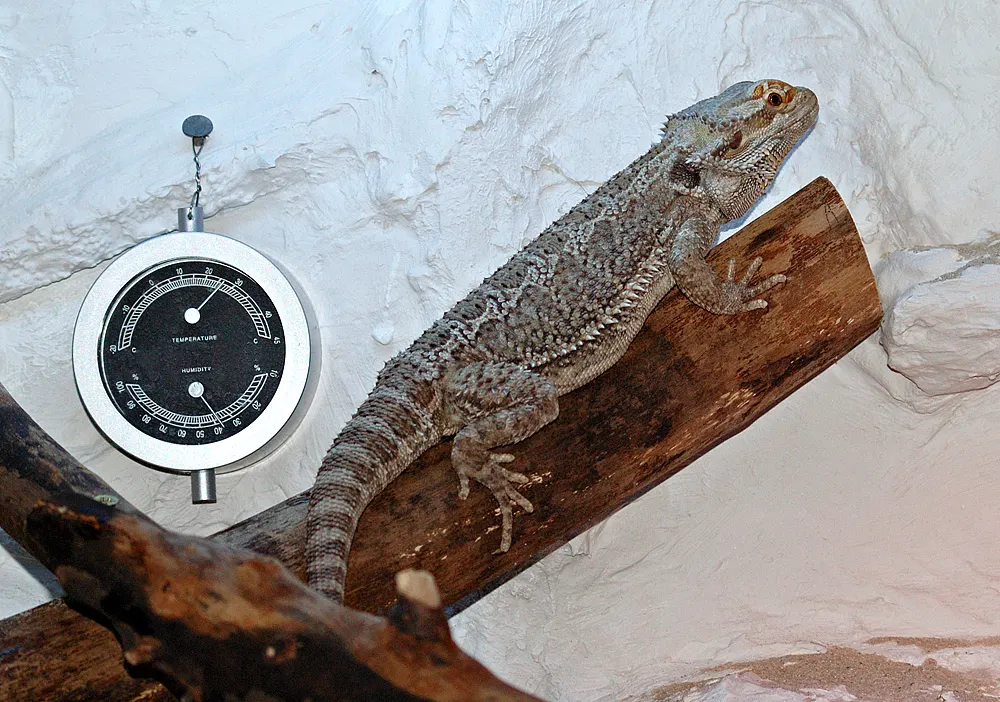
If you’re stuck between a bearded dragon and a leopard gecko for your first reptile, I get it. They’re the two animals every pet store points beginners toward, and for good reason. I keep both species right now, and in my experience the honest answer is that a leopard gecko is the easier first reptile, but a bearded dragon is the more rewarding one if you’re willing to do a bit more setup work. The bearded dragon vs leopard gecko question really comes down to how much space, light, and daily interaction you actually want.
Let’s get into the specifics, because “it depends” isn’t useful when you’re standing in a pet store about to spend $300.
Which one is actually easier to take care of?
Leopard geckos win on raw simplicity. They’re nocturnal, they don’t need UVB to survive (though I run it anyway, more on that below), they eat a simple insect diet, and they can live comfortably in a 20 gallon long tank as adults. A leopard gecko setup has fewer moving parts, which means fewer things to get wrong in your first six months.
Bearded dragons are not hard, but they’re a bigger commitment. They need more floor space, they need real UVB, and they eat both bugs and vegetables, which means two feeding routines instead of one. If you’ve never kept a reptile before and you want the lowest-friction option, get the gecko. If you want a lizard that will bask on your shoulder and follow your finger around, get the dragon and budget the extra time.
I go into the full setup process for each animal in the complete bearded dragon care guide and the complete leopard gecko care guide, so I’ll keep this page focused on the comparison itself.
How much space does each one need?
This is where a lot of first-time keepers get surprised. A baby bearded dragon can start in a 20 gallon tank, but adults need 40 gallons minimum, and I’d honestly push for 75 to 120 gallons if you have the floor space and budget. Bearded dragons grow to 18 to 24 inches long and they’re active, so they use every inch of that footprint.
Leopard geckos top out around 8 to 10 inches and they’re ground dwelling ambush hunters, not runners. A single adult is genuinely fine in a 20 gallon long tank, and a 10 gallon can work for a juvenile temporarily. That’s a real difference in furniture footprint and it affects everything downstream, from heating cost to how many hides you need to buy.
If you already know you’re leaning bearded dragon, I wrote a whole breakdown of tank sizing by age in this bearded dragon tank size guide.
Do bearded dragons and leopard geckos both need UVB lighting?
Bearded dragons absolutely need UVB. They’re diurnal desert baskers, and without a proper UVB bulb they can’t synthesize vitamin D3, which leads to metabolic bone disease. This isn’t optional and it isn’t a maybe. According to the Cummings School of Veterinary Medicine at Tufts University, proper UVB exposure and calcium supplementation are core requirements for preventing metabolic bone disease in captive bearded dragons.
Leopard geckos are nocturnal and historically were kept without UVB for decades. They can survive without it. But “can survive” and “should” aren’t the same thing. Current husbandry guidance from exotic animal veterinarians leans toward providing low level UVB for leopard geckos too, since wild geckos do get some crepuscular light exposure and supplemental UVB seems to support better bone density long term. I run a low output UVB tube over both of my gecko enclosures. It’s cheap insurance.
Which one is easier to handle?
Bearded dragons are the more social of the two by a wide margin. Mine tolerates handling for 20 to 30 minutes at a stretch, closes its eyes in the sun like it’s on vacation, and generally seems unbothered by being picked up once it’s tame. They’re diurnal, so they’re awake and interactive during your normal daytime hours.
Leopard geckos can be handled too, and most become calm with regular short sessions, but they’re smaller, faster, and more likely to bolt if startled. They’re also nocturnal, so peak activity is after dark, which means the “watch it be interesting” window doesn’t line up with when most people are home and awake. If daily handling and a lizard that acts like it enjoys your company matters to you, the dragon has the edge.
What do bearded dragons and leopard geckos eat?
This is one of the biggest day-to-day differences. Leopard geckos are strict insectivores. Crickets, mealworms, dubia roaches, that’s the whole menu, dusted with calcium powder. One feeding routine, no produce to keep fresh, no chopping.
Bearded dragons are omnivores, and the ratio shifts with age. Juveniles eat mostly insects, adults eat mostly leafy greens and vegetables with insects as a smaller supplement. That means you’re running a produce rotation on top of the bug supply, which adds a grocery habit most new keepers don’t expect. I put together the exact feeding percentages by age in this leopard gecko feeding schedule if you want the week-by-week version for the gecko side.
How long will either of these lizards live?
Both are longer commitments than people assume walking out of the pet store. Leopard geckos typically live 15 to 20 years in captivity with good care, sometimes longer. Bearded dragons run a bit shorter, typically 8 to 12 years, occasionally longer with excellent husbandry. Neither one is a “see how the semester goes” pet. You’re planning for a decade or more either way.
What does a full setup cost for each one?
Sticker prices vary a lot by brand and whether you buy pieces individually or as a kit, so I won’t invent numbers here. In relative terms, a leopard gecko setup usually lands in a similar cost tier to a bearded dragon setup once you account for tank size, because the gecko’s smaller enclosure partly offsets its lack of a heavy duty UVB requirement, while the dragon’s bigger tank is offset by not needing the deeper substrate and humidity gear some other species require. Where the dragon setup tends to cost more is the ongoing bill: bigger UVB bulbs, a stronger basking fixture, and a larger footprint if you decide to upgrade the enclosure as your dragon grows.
So which one should a beginner actually get?
Here’s my honest take after years with both. If you want the lower-effort entry point into reptile keeping, something you can set up in an afternoon and maintain in ten minutes a day, get the leopard gecko. If you want a lizard that acts more like a pet, tolerates handling, and you don’t mind a bigger tank and a produce drawer, get the bearded dragon. Neither choice is wrong. I’d tell a friend with limited counter space and a tight budget to start with the gecko, and I’d tell a friend who wants their kid genuinely bonded with the animal to go with the dragon.
Comparison table: bearded dragon vs leopard gecko
| Category | Bearded Dragon | Leopard Gecko |
|---|---|---|
| Adult enclosure size | 40 to 120 gallons | 20 gallon long |
| UVB requirement | Required, non-negotiable | Not required but recommended |
| Handling and temperament | Very tolerant, often seeks interaction | Tolerant with practice, more skittish |
| Typical lifespan | 8 to 12 years | 15 to 20 years |
| Diet type | Omnivore, insects and vegetables | Insectivore only |
| Setup cost tier | Similar overall, higher ongoing lighting cost | Similar overall, simpler ongoing costs |
| Beginner friendliness | Good, more moving parts | Excellent, fewer moving parts |
The short version
- Leopard geckos need about a 20 gallon long tank as adults, while bearded dragons need 40 to 120 gallons.
- Bearded dragons require UVB lighting to prevent metabolic bone disease, according to Tufts Cummings School of Veterinary Medicine.
- Leopard geckos can survive without UVB but benefit from a low output bulb.
- Leopard geckos typically live 15 to 20 years, longer than a bearded dragon’s typical 8 to 12 years.
- Bearded dragons are omnivores, eating both insects and vegetables, while leopard geckos eat only insects.
- Bearded dragons are generally more tolerant of handling and more active during the day.
- Leopard geckos are nocturnal, so their most active hours happen after you’re usually asleep.
- Overall setup cost is roughly comparable between the two once you account for tank size versus lighting needs.
Whichever animal you choose, the daily habits matter more than the species. A well kept leopard gecko outlives most dogs, and a well kept bearded dragon can become genuinely bonded to its owner. For general reptile husbandry principles that apply to both species, the UC Davis School of Veterinary Medicine’s exotic animal health resources are worth a look. Bearded dragon vs leopard gecko isn’t really a question of which animal is better, it’s a question of which routine fits your life.
If you’ve settled on the gecko, check out this leopard gecko starter kit checklist before you buy anything. If you’re leaning dragon, I broke down the real ongoing costs in this bearded dragon cost of ownership guide.