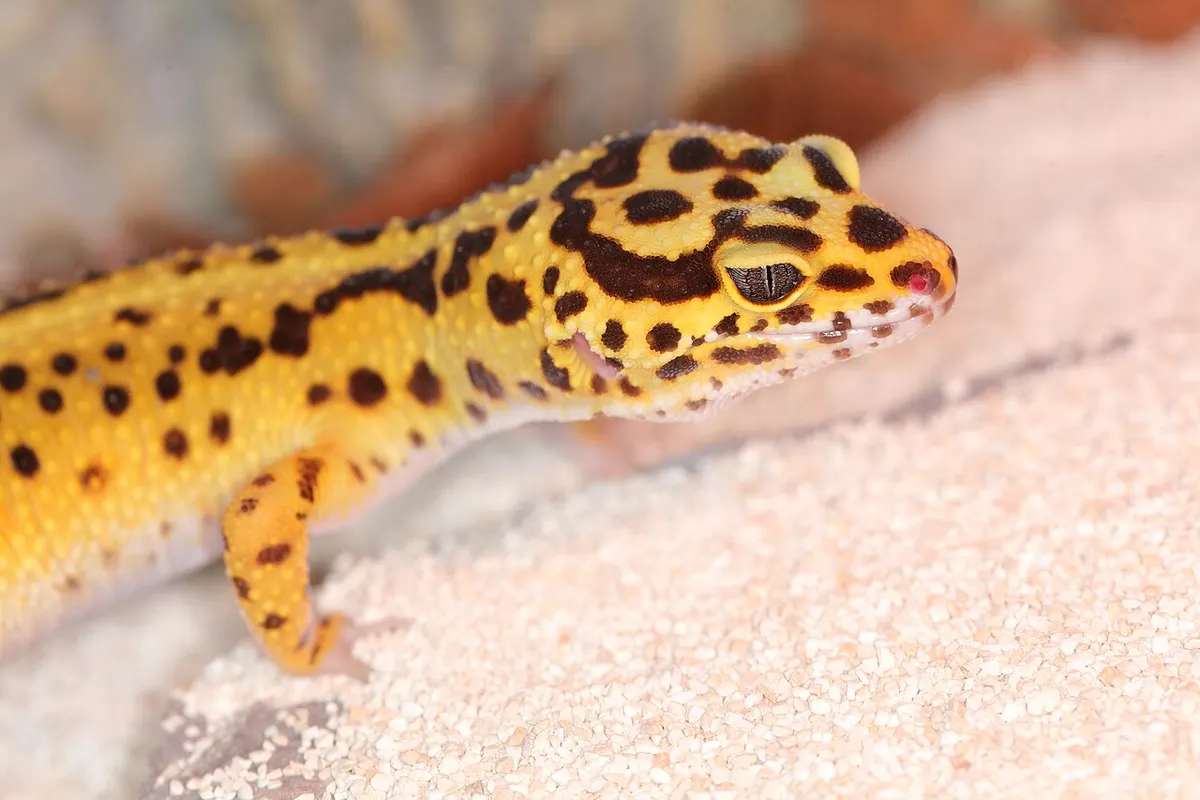
I get some version of this question every week: someone saw a leopard gecko at a reptile expo, fell for it on the spot, and now they’re standing in a pet store aisle with no idea what actually goes home with them. This leopard gecko starter kit checklist is the list I wish someone had handed me before my first gecko, back when I bought a 10 gallon tank and a heat rock because a teenager behind the counter told me to.
Neither of those things belongs on this list, for the record. Here’s what does.
What size enclosure does a leopard gecko need?
A single adult leopard gecko needs a minimum floor space of 36 by 18 inches, which is the footprint of a 40 gallon breeder tank. A 20 gallon long tank works for a juvenile, but geckos grow fast and you’ll be upgrading within a year, so buying the bigger tank once usually costs less than buying twice.
Height matters less than floor space. Leopard geckos are ground dwellers, they don’t climb, so a tall skinny tank wastes money on glass they’ll never use. Look for something long and low.

Keeper's pick: REPTI ZOO 20 Gallon Front Opening Glass Terrarium
This is a solid starter tank at 30 by 12 by 12 inches, long and low the way a gecko actually wants it. The front opening door matters more than people expect, reaching in from the front instead of looming down from above is a lot less stressful for a floor dwelling animal that reads "shadow overhead" as "hawk." Screen top ventilation keeps airflow reasonable too.
What heat source does a leopard gecko need?
Leopard geckos are desert animals that thermoregulate by moving between a warm side and a cool side of the tank. You need belly heat, not overhead heat, because in the wild they absorb warmth from sun baked rock and sand, not from a bulb above them.
The standard setup is an under tank heating mat on one end of the enclosure, wired through a thermostat. The mat alone is not a complete purchase. Without a thermostat, a heat mat has no way to stop itself from climbing past a safe temperature, and a mat running unchecked against glass can get hot enough to burn a gecko that presses against it. If a store tries to sell you the mat without mentioning the thermostat, that’s a red flag about the rest of their advice too.
Warm side surface temperature should land around 88 to 92 degrees Fahrenheit, with the cool side sitting around 70 to 75 degrees. A cheap stick on thermometer is not accurate enough to trust here, a digital thermometer with a probe is worth the extra few dollars.
What substrate is safe for a leopard gecko?
This is where most starter kit advice goes sideways. Loose sand, calcium sand, and walnut shell bedding get marketed directly at leopard gecko owners, and all three carry a real risk of impaction if a gecko swallows enough of it while hunting or accidentally licking a stray grain off its snout.
Safer options for beginners are paper towels, reptile carpet, or non adhesive shelf liner while the gecko is young. Once an adult is established and eating well, some keepers move to a bioactive substrate blend, but that’s a step two purchase, not a starter kit item.
Does a leopard gecko need a humid hide?
Yes, and this one surprises new owners because leopard geckos come from arid regions. The humid hide isn’t for everyday living, it’s a shed aid. Leopard geckos shed their skin in one piece every few weeks, and a pocket of high humidity, roughly 70 to 80 percent inside the hide itself, keeps the old skin soft enough to come off cleanly instead of sticking around toes and the tail tip.
A humid hide is usually built from a plastic container with damp sphagnum moss or paper towel inside, or bought pre made from resin. You’ll place it on the warm side of the tank so the moisture doesn’t just evaporate.
What’s the full leopard gecko starter kit checklist?
Here’s everything on the list in one place, with what it does and roughly what tier of spending it falls into.
| Item | Purpose | Why it matters |
|---|---|---|
| 40 gallon breeder tank (or 20 gallon long for a juvenile) | Living space with enough floor area to establish a warm side and cool side | Budget tier if secondhand, mid-range new. Too small a tank makes temperature gradients hard to maintain |
| Under tank heat mat | Belly heat for digestion and thermoregulation | Budget to mid-range. Without it, a gecko can’t properly digest food or regulate its body temperature |
| Thermostat | Regulates the heat mat to a safe target temperature | Mid-range. Running a heat mat without one risks overheating and burns |
| Digital thermometer with probe | Confirms actual warm side and cool side temperatures | Budget. Stick on dial thermometers are frequently inaccurate by several degrees |
| Hygrometer | Tracks humidity, especially inside the humid hide | Budget. Helps you know when the humid hide actually needs remoistening |
| Warm dry hide | Shelter on the warm side without added moisture | Budget. Geckos need to feel secure while still accessing heat |
| Cool dry hide | Shelter on the cool side | Budget. Lets a gecko retreat from heat entirely when it wants to |
| Humid hide | Shed aid and secondary water access | Budget to mid-range depending on style. Prevents stuck shed around toes and tail |
| Paper towel or reptile carpet substrate | Safe surface for young or new geckos | Budget. Avoids impaction risk from loose substrate |
| Shallow water dish | Fresh drinking water | Budget. Should be shallow enough that a small gecko can’t accidentally get stuck |
| Calcium powder with D3 | Prevents metabolic bone disease | Budget, but ongoing. Feeder insects alone don’t supply enough calcium |
| Multivitamin powder | Fills nutritional gaps from a feeder insect diet | Budget, ongoing. Used less often than calcium, typically once or twice a week |
| Feeder insects (crickets, mealworms, or dubia roaches) | Primary diet | Ongoing cost, budget per feeding. Variety and gut loading matter more than any single species |
| Feeding tongs | Safer, cleaner feeding | Budget. Reduces the odds of an accidental nip during hand feeding |
How much does a leopard gecko starter kit actually cost?
I’m not going to hand you a made up total, because prices shift constantly and a number that’s accurate today reads as wrong in six months. What I can tell you is the shape of the spending. The enclosure and the heat mat plus thermostat are your two real investments, everything else on the list, hides, dishes, substrate, supplements, sits in the budget range individually even though it adds up across a dozen small items. If you’re pricing this out, expect the tank and heating gear together to be roughly half your total starter spend, with the rest spread thin across the smaller stuff.
Buying secondhand for the tank itself is one of the more reasonable places to cut cost, glass doesn’t wear out. I would not cut cost on the thermostat. That’s the one piece of gear standing between your gecko and a heat mat with no limits.
The short version
- Adult leopard geckos need a minimum 36 by 18 inch floor footprint, roughly a 40 gallon breeder tank.
- Warm side surface temperature should run 88 to 92 degrees Fahrenheit, cool side around 70 to 75 degrees.
- A heat mat always needs a thermostat, running one without a thermostat risks burns.
- Loose sand and calcium sand substrates carry a real impaction risk and are best avoided for beginners.
- Three hides are standard: a warm dry hide, a cool dry hide, and a humid hide.
- The humid hide should hold 70 to 80 percent humidity and is mainly a shed aid, not everyday housing.
- Feeder insects need calcium powder with D3 dusted on at most feedings, plus a multivitamin powder once or twice a week.
- Leopard geckos shed their skin in one piece every few weeks throughout their life.
Bottom line on your leopard gecko starter kit checklist
The full leopard gecko starter kit checklist really comes down to five decisions: a big enough tank, a heat mat paired with a thermostat, an accurate way to measure both temperature and humidity, three hides instead of one, and a safe substrate. Get those five right and the smaller stuff, dishes, tongs, supplements, is easy to fill in as you go.
If you’re still deciding whether a leopard gecko is the right first reptile at all, our leopard gecko care for beginners guide covers daily care once the setup is done, and our bearded dragon vs leopard gecko comparison is worth a look if you haven’t fully committed to species yet. Once the tank is set up and the gecko is home, our leopard gecko feeding schedule guide walks through exactly how often and how much to feed at each life stage.
For more detail on husbandry basics straight from people who treat these animals, the Association of Reptile and Amphibian Veterinarians’ leopard gecko care guide and MedVet’s leopard gecko care sheet are both good places to cross check anything in this article against a veterinary source.