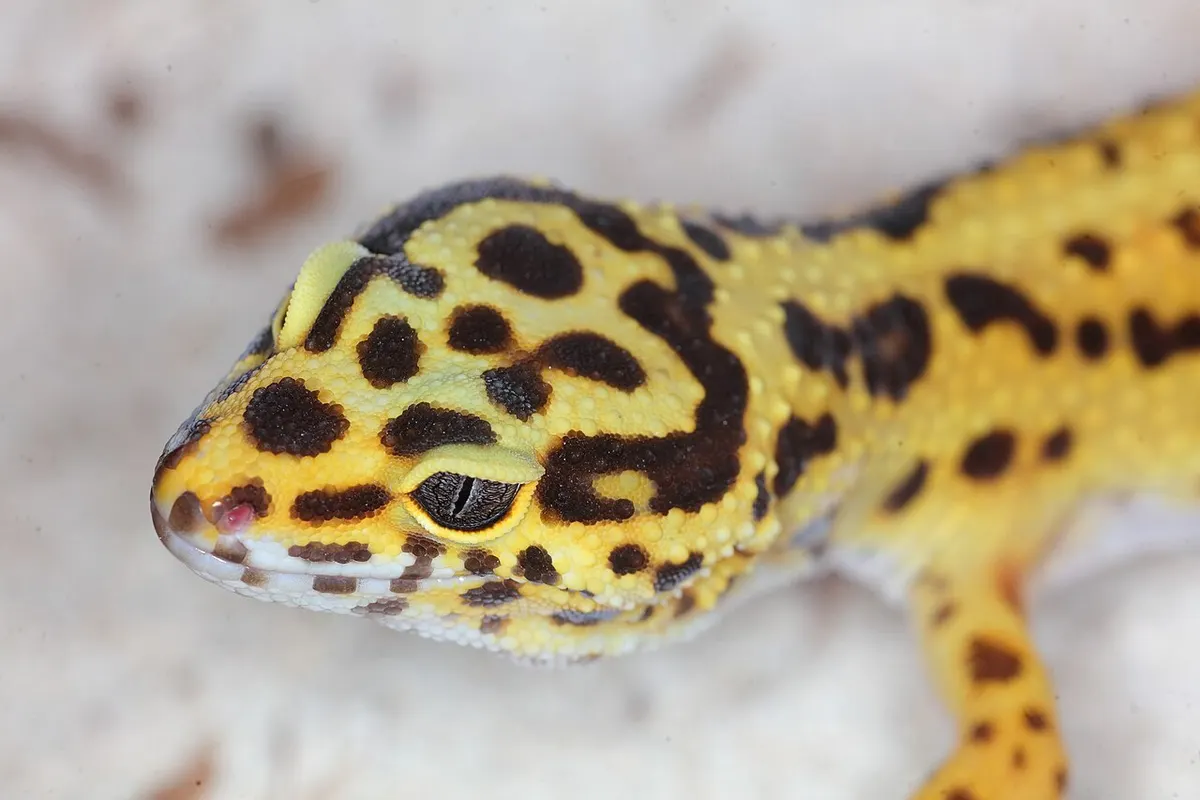
The first time I set up a leopard gecko tank, I did it backward. I put the gecko in, then spent the next two days rearranging hides and moving the water dish while a stressed animal hid in the corner. Setup order matters more than people expect. This leopard gecko enclosure setup guide walks through the whole process in the order that actually works, so your gecko goes into a finished habitat instead of a construction site.
This is a companion to our leopard gecko starter kit checklist, which covers what to buy. This one covers how it all goes together.
What order should you set up a leopard gecko enclosure in?
Do the heavy, permanent stuff first and the finishing touches last. Every step below needs to be checked and stable before the next one starts, and the gecko goes in only after everything passes inspection.
- Clean the tank and place it in its final location, away from direct sun and drafts.
- Add substrate.
- Install the heat mat under the tank and wire it through a thermostat.
- Place all three hides.
- Add the water dish and calcium dish.
- Add decor and background, if you’re using any.
- Run the setup empty for 24 to 48 hours while you check temperatures and humidity with a thermometer and hygrometer.
- Introduce the gecko.
That 24 to 48 hour dry run is the step almost everyone skips, and it’s the one that saves you from putting an animal into a tank that’s actually running 15 degrees hotter than you think.
Here’s a quick reference for where everything lands once the tank is fully set up.
| Item | Zone | Notes |
|---|---|---|
| Heat mat | Under the tank, one end only | Never centered, never under the full floor |
| Warm dry hide | On top of the heat mat zone | Main resting and digesting spot |
| Humid hide | Warm side, beside the warm dry hide | Shed aid, needs 70 to 80 percent humidity inside |
| Cool dry hide | Opposite end, no heat below | Lets your gecko fully escape the heat |
| Water dish | Cool side | Keeps evaporation from raising warm-side humidity |
| Calcium dish | Cool side, near the cool hide | Away from heat and humidity so powder doesn’t clump |
| Substrate | Full floor, 4 inches deep if loose | Paper towel or liner for young or new geckos |
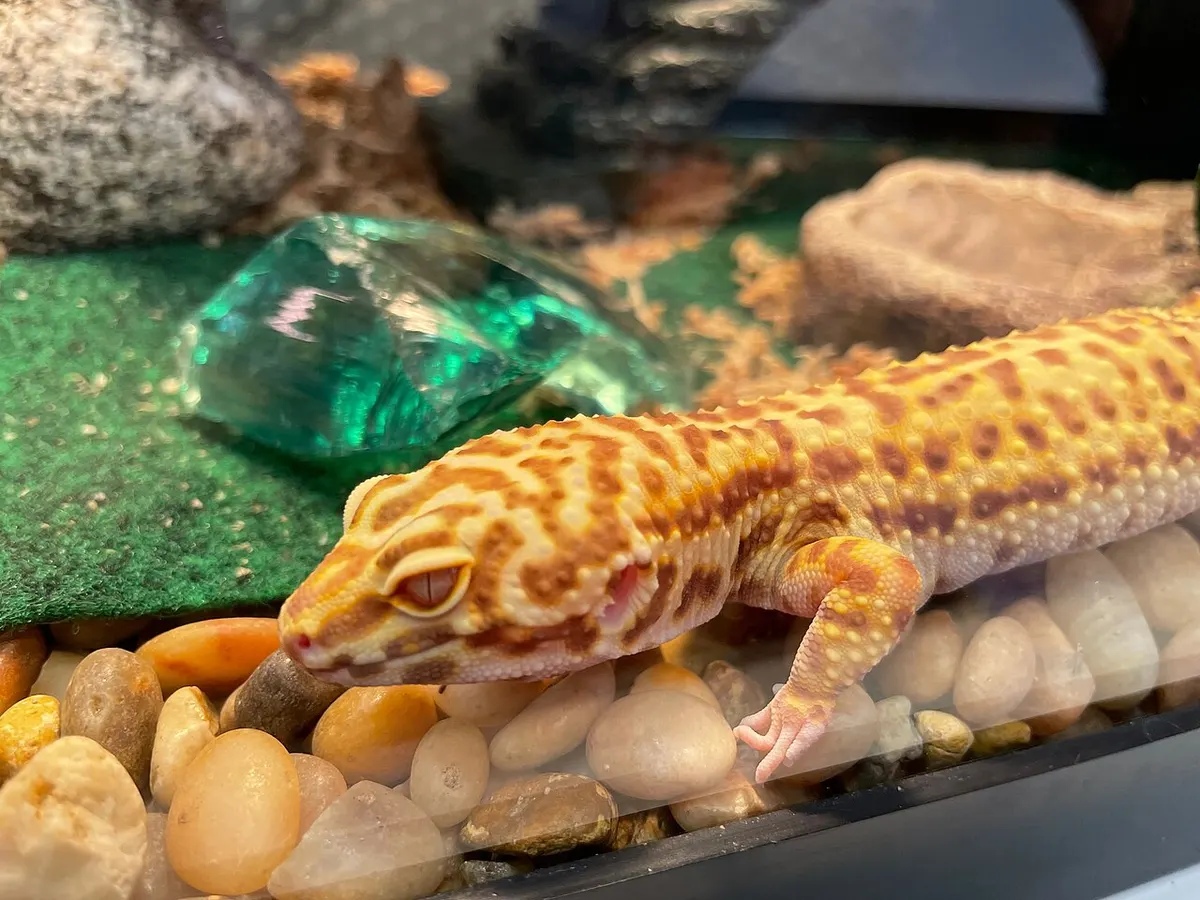
Photo: Fungus Guy, CC BY-SA 4.0, via Wikimedia Commons
How do you set up the substrate for a leopard gecko?
Substrate is the step where beginner setups go wrong most often, mostly because pet store shelves are stacked with products that shouldn’t be there. Skip loose sand, calcium sand, and walnut shell bedding. Those carry a real impaction risk if a gecko swallows enough of it while hunting.
For a young or new gecko, paper towels or non-adhesive shelf liner are the safest starting point and they make it easy to spot loose stool while you’re getting to know your animal’s normal habits. Once your gecko is established and eating consistently, most keepers move up to a bioactive-style loose substrate, a mix of organic topsoil, sand, and a clay binder like excavator clay, that supports natural digging behavior.
If you go the loose substrate route, depth matters. Pack it at least 4 inches deep so your gecko can actually dig and self-regulate, not just scratch at the surface. Saturate the mix, then let it dry completely before the gecko goes anywhere near it. Damp substrate under a heat source is how you end up with a respiratory problem instead of a happy gecko.
Keeper's pick: Zoo Med Excavator Clay Burrowing Substrate, 10 lb

This is the clay component keepers mix into a semi-arid substrate blend for a diggable, self-supporting texture that holds a burrow without collapsing. Combine it with organic topsoil and play sand, saturate, then let it dry fully before adding your gecko. A 10 lb bag is plenty for a first mix in a 40 gallon breeder.
Where do the three hides go in a leopard gecko enclosure?
A leopard gecko needs three separate hides, and where you put each one is not interchangeable.
The warm dry hide sits directly over the heat mat, on the warm side of the tank. This is where your gecko digests food and does most of its resting during the day. The cool dry hide goes on the opposite end, with no heat source nearby, so your gecko has somewhere to retreat from heat entirely when it wants to. The humid hide, the one beginners most often forget, goes on the warm side too, next to or overlapping the warm dry hide, so the moisture inside doesn’t evaporate before it’s useful.
Hide sizing matters as much as placement. A gecko in an oversized hide doesn’t feel secure and will avoid it, so snug beats spacious. If you can see daylight around your gecko’s body when it’s curled up inside, size down.
Keeper's pick: Exo Terra Reptile Den Moist Hide Box, Medium

Purpose built as a moist hide, with a tunnel entrance that helps trap humidity around damp sphagnum moss or paper towel inside. That's the shed-aid function a plain hide doesn't give you. Medium size fits a single adult leopard gecko without feeling like a cave.
How do you set up the heat gradient correctly?
The heat mat goes on the outside of the tank, under one end only, never in the center and never under the whole floor. Covering the entire floor in heat removes your gecko’s ability to escape it, which defeats the point of a gradient in the first place.
Wire the mat through a thermostat with the probe taped to the inside glass at gecko level, not floating in the air above the substrate. Air temperature and surface temperature are not the same number, and surface temperature is the one that actually matters for a ground-dwelling animal absorbing heat through its belly.
Target 88 to 92 degrees Fahrenheit on the warm side surface, 70 to 75 on the cool side. Don’t trust these numbers until you’ve measured them yourself with a real thermometer during that 24 to 48 hour dry run. Stick-on dial thermometers are notoriously inaccurate, sometimes off by 10 degrees or more, so a digital thermometer with a probe is worth the extra few dollars.
Keeper's pick: Zoo Med Digital Combo Thermometer Humidity Gauge (TH-31)
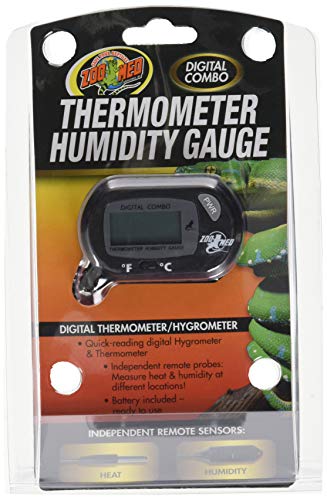
One unit reading both temperature and humidity, with a probe you place exactly where your gecko actually sits instead of guessing from a wall-mounted dial. Mount the display outside the tank and route the probe to the warm side floor for your dry run readings, then move it as needed to spot-check the cool side and the humid hide.
Where should the water dish and calcium dish go?
Keep the water dish on the cool side, not the warm side. Water evaporates faster over the heat mat, which pushes humidity up on the wrong side of the tank and can undermine the hard line you’re trying to hold between warm-dry and humid-hide-only moisture. A shallow dish is enough. Leopard geckos aren’t big drinkers and mostly lap droplets, but they’ll use a dish if it’s there.
A shallow calcium dish with calcium and D3 powder can sit anywhere accessible, though many keepers place it near the cool hide so it’s not sitting in the warmest, most humid corner of the tank where powder clumps fastest.
Do you need decor or a background?
Not strictly, but a bare tank is harder on your gecko than it looks. Leopard geckos are prey animals in the wild, and an enclosure with a background, some rock or resin decor, and enough visual clutter to break up open sightlines reads as more secure to them than a plain glass box, even with three good hides. Cover the back and at least one side with a background material rather than leaving bare glass. It cuts down on your gecko seeing its own reflection and pacing the glass at night, which is a stress behavior more common than most beginners realize.
Skip a solid glass lid if your tank has one available as an option. Solid lids trap CO2, push humidity higher than you’re aiming for, and can contribute to respiratory issues over time. A screen top with the heat mat and thermostat set up properly will hold your target temperatures fine.
The short version
- Set up in order: tank placement, substrate, heat mat and thermostat, hides, water and calcium dishes, decor, then a 24 to 48 hour dry run before the gecko goes in.
- Skip loose sand and calcium sand substrates. Paper towel or shelf liner is safest for a new gecko, loose bioactive-style substrate at 4 inches deep once established.
- Three hides are non-negotiable: warm dry over the heat mat, cool dry on the opposite end, and a humid hide next to the warm dry hide.
- Warm side surface temperature should read 88 to 92 degrees Fahrenheit, cool side 70 to 75, measured with a real digital thermometer at gecko level.
- Water dish goes on the cool side to avoid pushing up ambient humidity.
- Use a screen top, not a solid lid, to avoid trapping CO2 and excess humidity.
Bottom line on leopard gecko enclosure setup
Get the order right and most of the common leopard gecko problems never happen. Substrate before heat, heat before hides, hides before dishes, and a dry run before your gecko ever sees the tank. If you haven’t sourced the gear yet, our leopard gecko starter kit checklist has the full shopping list with budget notes. Once the enclosure is running, our leopard gecko care for beginners guide covers daily care, and our leopard gecko feeding schedule walks through exactly how much to feed at each age.
For more on substrate safety and enclosure basics from a veterinary source, LafeberVet’s basic information sheet for leopard geckos and MedVet’s leopard gecko care sheet are both good places to cross check anything here.