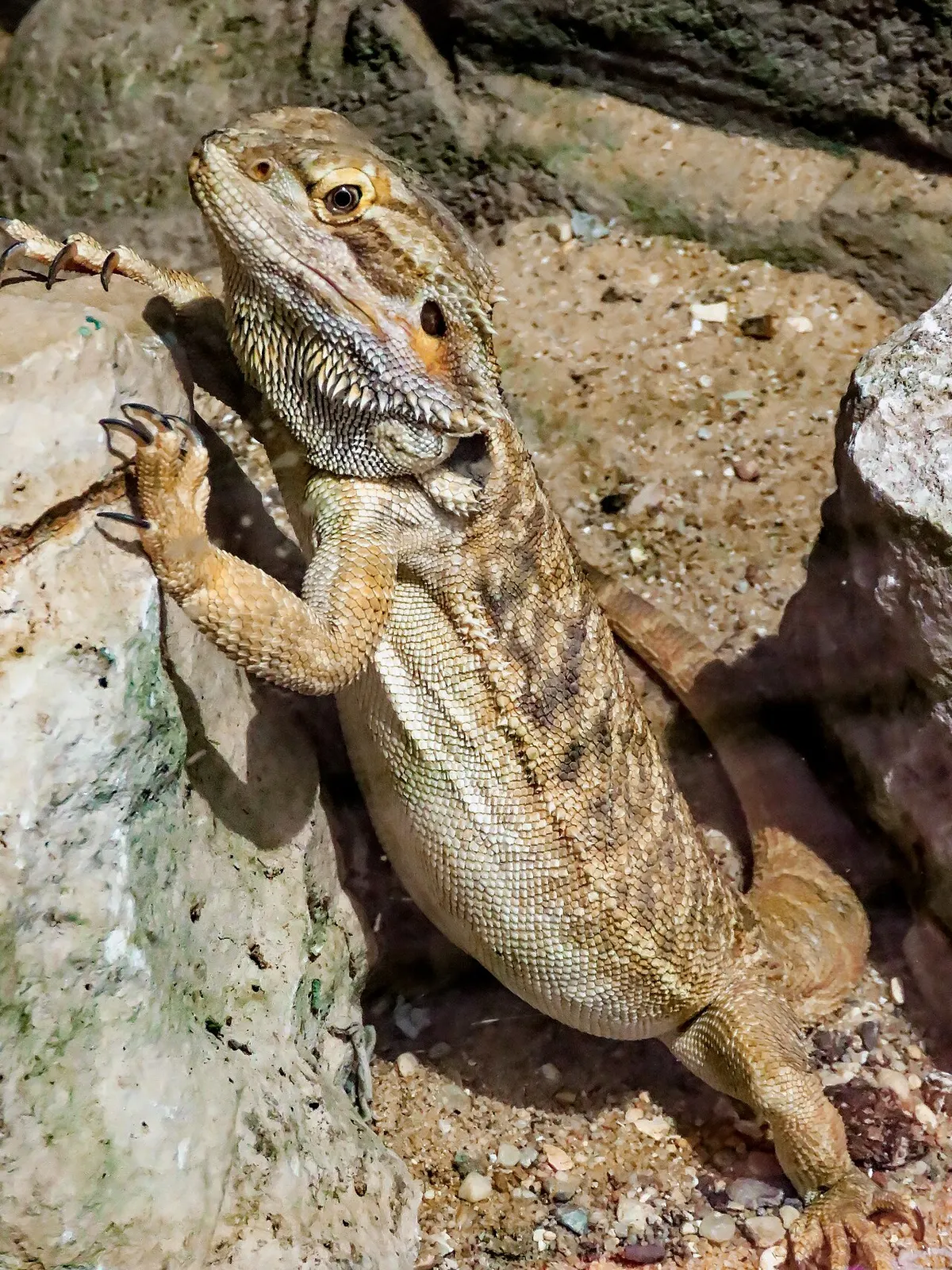
The first time someone at a reptile expo told me my dragon was “just a classic,” I didn’t know whether to be offended. Turns out classic isn’t an insult, it’s one of dozens of bearded dragon morphs and colors, and once you know a handful of the genetics terms behind them the whole conversation stops sounding like a foreign language. This guide sorts out what’s actually genetic (a morph), what’s just selective breeding for color (not a morph, whatever the seller’s sign says), and which traits are worth knowing about before you buy, especially the one that comes with real welfare baggage.
What’s the difference between a morph and a color?
A morph is a physical trait tied to a specific, identifiable gene: leatherback, hypomelanistic, translucent, that kind of thing. Breed two dragons carrying the same morph gene and you get predictable results in the offspring, the same way you’d predict eye color odds in a genetics class.
A color like “red,” “citrus,” or “sandfire” is different. There’s no single red gene. These are the result of breeders selecting, generation after generation, for dragons with more saturated pigment in that direction. Two “red” dragons from different bloodlines can throw babies that look nothing like either parent, because color intensity is polygenic, controlled by a pile of genes working together rather than one on/off switch. A dragon can be both a morph and a color at once, like a “red leatherback.”
Whatever the tag on the tank says, ignore any confident promise about how a specific batch of babies will turn out on the color side. Morphs are predictable. Colors are a trend line, not a guarantee.
The genetics in plain terms
Three inheritance patterns cover almost every bearded dragon morph you’ll run into:
Recessive. A dragon needs two copies of the gene, one from each parent, to actually show the trait visually. A dragon with just one copy is a “het” (heterozygous), it carries the gene but looks completely normal. Hypomelanistic, translucent, zero, and witblits are all recessive.
Dominant. One copy is enough to show the trait. Dunner and genetic stripe fall here.
Co-dominant. One copy produces a visible but partial version of the trait. Two copies produce the full “super” form. Leatherback is the textbook example, and its super form is the reason silkbacks exist, more on that below.
Common bearded dragon morphs
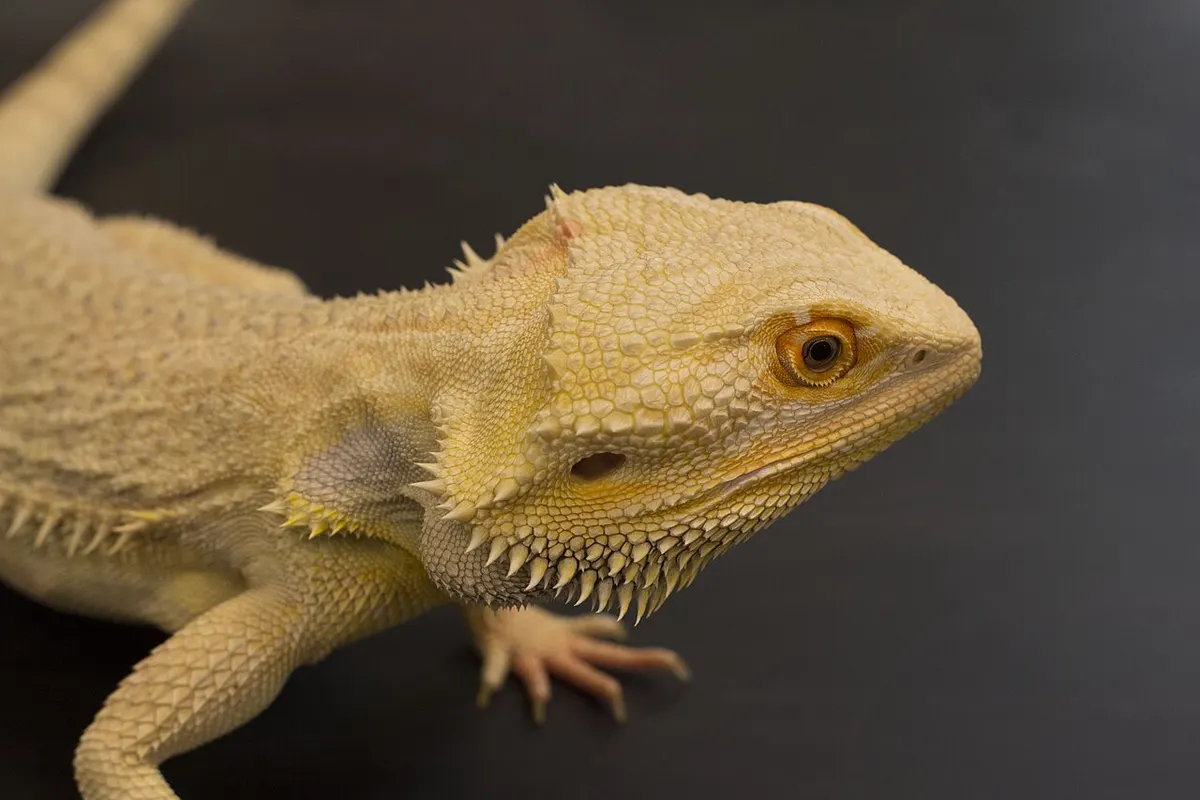
Photo: Bre jaye, CC BY 4.0, via Wikimedia Commons
| Morph | Inheritance | What to look for |
|---|---|---|
| Classic / normal | Wild-type | Sandy tan to brown with a tiger-stripe pattern, the baseline look |
| Hypomelanistic (hypo) | Recessive | Reduced dark pigment, brighter overall color, clear or pale nails instead of black |
| Translucent (trans) | Recessive | Solid black eyes with no visible sclera, often a blue-tinted belly as a baby |
| Leatherback | Co-dominant | Smoother back with far fewer spikes than a classic, head and beard spikes stay normal |
| Silkback | Co-dominant (super leatherback) | No scales at all, smooth and soft to the touch |
| Zero | Recessive | Little to no pattern, pale white to silver base color |
| Witblits | Recessive | Muted, patternless coloring, usually tan, peach, or cream |
| Wero | Recessive combination | Witblits and zero genetics combined, extremely pale with minimal markings |
| Dunner | Dominant | Randomly angled scales, larger feet, patchy or blotched pattern |
| Genetic stripe | Dominant | A clean, continuous stripe running down each side of the spine |
| Paradox | Non-heritable anomaly | Random patches of off-color scales, not something a breeder can reliably reproduce |
| German giant | Polygenic, size-based | Not a color or pattern trait, just selectively bred for larger adult size, up to 24 to 26 inches |
That’s genetics. Red, orange, citrus, tangerine, sandfire, and similar names describe color intensity, not a specific trait, and any of them can show up layered on top of a classic, hypo, leatherback, or almost any other morph.
Why silkbacks are the one morph you should think twice about
I’ll say this plainly since a lot of morph guides dance around it: silkbacks are not a beginner-friendly morph, and plenty of experienced keepers avoid breeding them on purpose.
A silkback is what you get from breeding two leatherbacks together, the “super” form of that co-dominant gene. Without scales, they lose the protection scales normally provide. That translates into real, ongoing husbandry problems: higher risk of skin injury and infection, much greater sensitivity to standard UVB output (they typically need a lower-strength bulb than a scaled dragon of the same age), faster water loss through the skin, and shedding that’s closer to a bad sunburn peeling than a normal shed cycle. Breeders who work with them report shorter average lifespans and more frequent vet visits than with scaled morphs, and females bred to produce silkbacks face a real risk of injury during the process. None of that is a reason to judge anyone who already has one, they need the same love as any other dragon, but it’s a reason not to buy one as your first bearded dragon, and a reason to think hard before breeding for them at all.
If you see a silkback for sale and you’re set on the look, ask specifically about the breeder’s UVB setup for that animal and their experience with shedding issues before anything else.
What morphs cost
Morph and color genetics have a real, direct effect on price, on top of the usual breeder-versus-pet-store gap.
| Morph or color | Typical price range |
|---|---|
| Classic / normal | $25 to $100 |
| Hypomelanistic | $100 to $400 |
| Leatherback | $100 to $800 |
| Silkback | $80 to $250 |
| Translucent | $150 to $700 |
| Witblits | $100 to $700 |
| Dunner | $100 to $800 |
| Zero | $300 to $2,000 |
| Paradox | $350 to $2,000 |
| Red / citrus / ruby color lines | $150 to $600 |
Zero and paradox sit at the top because they’re harder to produce consistently, zero requires stacking recessive genes from both parents, and paradox can’t be bred to order at all, a breeder is essentially getting lucky. Silkbacks price lower than you’d expect for how visually dramatic they are, partly because ethical concerns have cooled demand and partly because they’re a byproduct of leatherback breeding rather than a standalone goal for most programs.
Whatever the morph, price alone tells you nothing about health. A cheap classic from a breeder who handles quarantine and fecal testing properly is a better buy than an expensive zero from someone who can’t answer basic husbandry questions. For a full cost breakdown beyond the animal’s purchase price, our bearded dragon cost of ownership article covers the setup and monthly numbers.
Does a morph change how you care for a dragon?
Mostly no, with a few specific exceptions worth flagging:
Hypo, translucent, leatherback, and especially silkback dragons tend to do better under a slightly lower-strength UVB source than a standard classic of the same age, since they have less protective pigment and, for silkbacks, no scales at all. A common starting point is a 5.0-output bulb instead of the 10.0 usually recommended for classics, paired with checking actual output with a UVI meter rather than guessing from the box label.
Keeper's pick: REPTI HOME T5 5.0 UVB Bulb (2-Pack)

A lower-output 5.0 T5 tube like this one is the usual starting point for hypo, translucent, leatherback, and silkback dragons, whose reduced pigment and (for silkbacks) missing scales mean they don't need or tolerate the higher UVB load a classic gets from a 10.0 bulb. Pair it with a UVI meter rather than assuming the wattage on the box matches actual output at your fixture's distance.
German giants need the size accounted for from the start, since an adult can outgrow a standard 4x2x2 foot enclosure. If you’re leaning toward one, check our bearded dragon tank size guide before you buy the tank, not after.
Beyond those cases, feeding schedule, temperature gradient, and daily care are the same regardless of morph. A zero dragon and a classic dragon living side by side need the same basking temp, the same calcium schedule, and the same amount of attention. The genetics change the look, not the animal underneath it.
Frequently asked questions
Are darker or lighter dragons always a specific morph? Not necessarily. Bearded dragons naturally shift shade with temperature, mood, shedding cycle, and age, a stressed or cold dragon often darkens noticeably without any genetic cause. Judge a morph by the specific traits above (nail color, scale texture, eye color, pattern), not shade alone.
Can two different morphs be combined? Yes, and this is how most “designer” dragons on price lists are made, a leatherback that’s also hypo and citrus-colored, for example. Each trait still follows its own inheritance pattern independently.
Do morphs affect lifespan? Generally no, with the clear exception of silkbacks, which face real, documented welfare and lifespan concerns tied to the missing scales.
The short version
- A morph is a genetically predictable trait (hypo, leatherback, translucent). A color (red, citrus, sandfire) is the product of selective breeding for pigment intensity and isn’t tied to one gene.
- Recessive traits need two gene copies to show, dominant traits need one, co-dominant traits show partially with one copy and fully with two.
- Silkbacks are the super form of leatherback and come with real welfare tradeoffs: skin injury risk, UVB sensitivity, faster dehydration, and difficult shedding.
- Prices scale with rarity and difficulty to produce, from $25 to $100 for a classic up to $2,000 for a zero or paradox.
- Hypo, translucent, leatherback, and silkback dragons generally do better on lower-output UVB than a standard classic.
- Outside of a handful of UVB and sizing exceptions, daily care doesn’t change based on morph.
Bottom line on bearded dragon morphs
Morph shopping is fun, and there’s nothing wrong with picking a dragon because you love how it looks. Just go in knowing which traits are genetics and which are marketing, and steer clear of a silkback unless you’ve done real homework on the extra care it needs. Once you’ve settled on a look, the day-to-day care is the same guide either way, our how to take care of a bearded dragon hub walks through all of it from there.
For more on the genetics side, ReptiFiles’ writeup on silkback ethics is worth reading before you buy one, and LafeberVet’s bearded dragon information sheet is a solid general source on UVB and care basics that apply across every morph on this list.