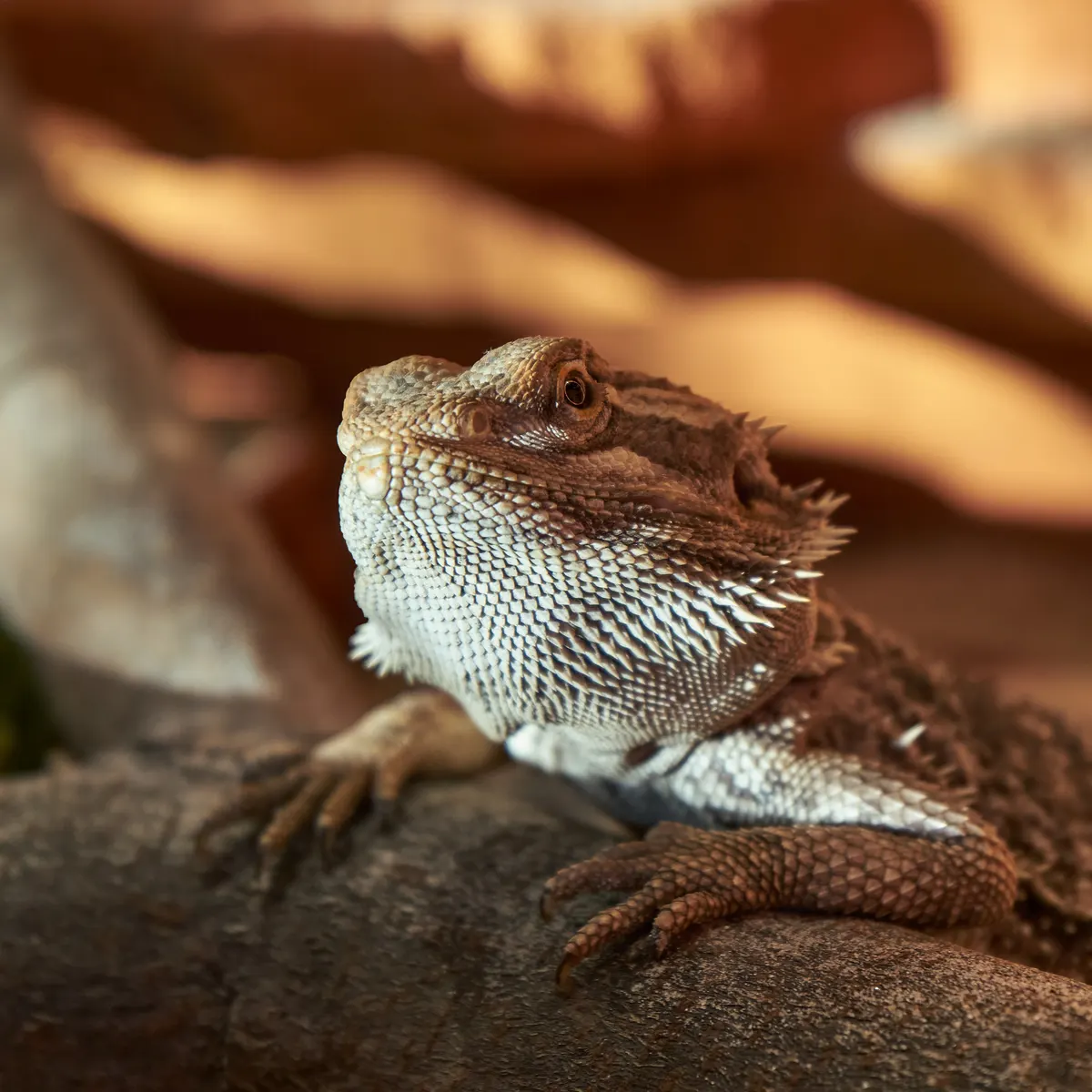
Metabolic bone disease is the thing every bearded dragon care sheet warns you about and almost none of them explain well. You get “make sure you have UVB” and “dust with calcium,” and that’s technically correct, but it skips the part that actually matters: why those two things work together, and what happens when one of them quietly fails for months before you notice anything wrong.
I learned the “quietly” part the hard way. Not with my own dragon, but with a friend’s, a sweet three year old female who’d been on the same setup since she was a baby. Nobody had swapped her UVB bulb since she arrived. It still lit up fine. It just wasn’t doing the one job that mattered anymore. By the time her back legs started looking a little off, the damage had already been building for a long time.
What Metabolic Bone Disease Actually Is
Metabolic bone disease, usually shortened to MBD, isn’t one specific illness. It’s what happens when a bearded dragon’s body can’t keep enough calcium in its bones, so it starts pulling calcium out of them to keep blood calcium levels stable everywhere else, especially in muscles and nerves, where low calcium is more immediately dangerous than soft bones. Over weeks and months, that steady withdrawal leaves bones thin, weak, and in bad cases, bent or broken.
This is a description of a process, not a diagnosis you can make by looking at your dragon for a minute. Confirming MBD and figuring out how far it’s progressed is a vet job, usually involving a physical exam, bloodwork to check calcium and phosphorus levels, and often an X-ray to see how much bone density has actually been lost.
What Causes It
MBD comes down to a handful of overlapping failures, and it’s rarely just one of them:
| Cause | What’s actually happening | How it shows up |
|---|---|---|
| Not enough UVB | No UVB means no vitamin D3 made in the skin, and without D3 the gut can’t absorb dietary calcium no matter how much you dust | The most common root cause by far |
| Weak or expired UVB | Bulbs lose UV output long before they stop glowing, so “the light’s still on” means nothing | Easy to miss for months, like my friend’s dragon |
| Not enough dietary calcium | Feeder insects are naturally low in calcium and high in phosphorus, so undusted feeders are a built-in deficit | Compounds with weak UVB instead of replacing the problem |
| Inverted calcium to phosphorus ratio | A diet skewed too far toward phosphorus actively blocks calcium absorption, even when some calcium is present | Common with feeder-heavy diets low on dusted, calcium-rich produce |
| Oxalate-heavy greens as a staple | Spinach, beet greens, and similar high-oxalate vegetables bind calcium and make it unusable | A sneaky one, since it looks like “feeding vegetables,” which sounds healthy |
Vitamin D3 overdose from excessive supplementation can also disrupt calcium regulation, which is why D3 dusting has its own, lighter schedule separate from plain calcium. More isn’t automatically safer.
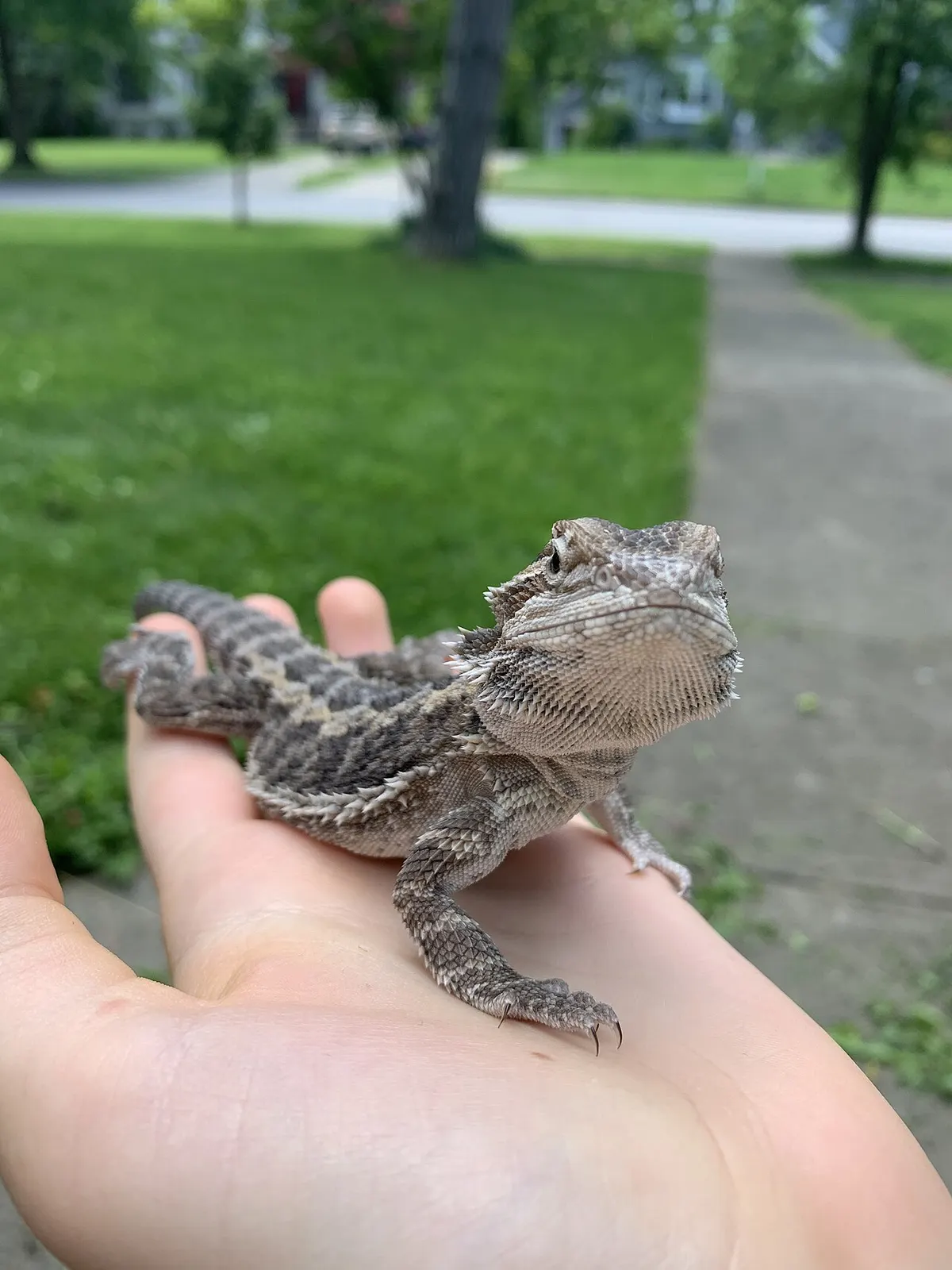
Photo: Cliomd1, CC BY-SA 4.0, via Wikimedia Commons
Early Warning Signs
Early MBD is subtle enough that a lot of keepers miss it entirely, which is exactly why it’s worth knowing what “early” actually looks like instead of waiting for something dramatic:
- Reduced appetite or pickier eating than usual
- General lethargy, less basking enthusiasm, less interest in exploring
- Slight weight loss
- A very faint softness along the jaw if you run a finger along it, well before it looks visibly swollen
Advanced Signs That Mean Real Bone Loss
These are the signs that show up once MBD has been progressing for a while, and they’re the ones that should move you from “keep an eye on it” to “call the vet this week”:
- A visibly swollen, soft, or rubbery lower jaw, sometimes called “rubber jaw”
- Bowed, bent, or swollen limbs
- Tremors, twitching, or jerky movements
- Difficulty walking, dragging limbs, or trouble supporting body weight
- Visible fractures or a limb that suddenly won’t bear weight
- Seizures, in severe, advanced cases
I’m not going to walk through a treatment protocol here, because that’s exactly the kind of thing that needs to come from a vet who’s actually examined your dragon, not an article. What I can tell you is that veterinary overviews of MBD in reptiles consistently point to the same thing: outcomes are much better when it’s caught and treated early, and a dragon showing any of the signs above needs an exotics vet, not a wait-and-see week.
Keeper's pick: Zoo Med Reptile Calcium with Vitamin D3

This is the baseline supplement most keepers reach for, a fine powder you dust onto feeder insects before offering them. It's not a substitute for real UVB, D3 made in the skin from actual UVB exposure is still the better pathway, but it's the backup that covers you on cloudy bulb days, during a bulb swap, or just as standard practice alongside good lighting.
Getting the Calcium and D3 Schedule Right
The dusting schedule is one of those details that varies by age, and getting it backwards (dusting an adult every day, or a baby only once a week) undershoots or overshoots in a way that matters over months:
| Dragon | Plain calcium dusting | Calcium with D3 |
|---|---|---|
| Baby or juvenile | 4 to 5 times a week | Not a separate step, use a D3-inclusive powder on the same schedule if your UVB setup is uncertain |
| Adult | 1 to 2 times a week | Once a week |
The calcium to phosphorus ratio in the overall diet matters as much as the dusting frequency. Vet guidance puts the target at a ratio of at least 2:1, calcium to phosphorus, and feeder insects on their own usually run the opposite direction, more phosphorus than calcium, which is the whole reason dusting exists in the first place. Gutloading feeders with calcium-rich produce before feed-off helps close that gap further, on top of direct dusting.
Where UVB Actually Fits In
Calcium powder is backup. UVB is the main event, because it’s what lets your dragon make its own vitamin D3 and actually use the calcium it’s eating. A dragon on a perfect dusting schedule under a dead or absent UVB bulb will still develop MBD over time, just slower than one with no supplementation at all.
The target most current lighting guidance points to is a UV index of roughly 4.0 to 4.5 at the basking spot, which lines up with where wild bearded dragons sit in the sun. We go through bulb types, strengths, and mounting distances in detail in our best UVB bulb guide, but the short version is a linear T5 HO tube, replaced every 6 to 8 months for a juvenile’s enclosure and yearly for an adult’s, since UVB output fades well before the bulb looks dim.
Temperature matters here too. Vitamin D3 synthesis and general digestion both slow down in a dragon that’s basking too cool, which is part of why WSU’s veterinary teaching hospital recommends a basking spot in the 95 to 110°F range with a cooler end around 75 to 80°F, not just a single number for the whole tank.
Can Metabolic Bone Disease Be Reversed?
Mild MBD, caught early, often improves significantly once a vet sets up a correction plan covering diet, supplementation, and lighting, sometimes alongside oral or injectable calcium depending on how low blood calcium has dropped. More advanced cases, especially ones with fractures, significant bone deformity, or seizures, can stabilize with treatment, but existing structural damage, a permanently bowed limb, for instance, typically doesn’t fully undo itself. That’s the real argument for catching this at the early, easy-to-miss stage rather than the advanced one.
I’m not going to pretend to know where any individual dragon falls on that spectrum from a written description. That call belongs to a vet who’s seen bloodwork and, usually, an X-ray.
When to Call an Exotics Vet
Reach out to a reptile-experienced vet, not a general small animal practice, if you see any of the following:
- A soft, swollen, or rubbery jaw
- Visible limb bowing, swelling, or a limb that won’t bear weight
- Tremors, twitching, or seizures
- Sudden reluctance to move, climb, or bask like normal
- Any combination of reduced appetite and lethargy that’s lasted more than a few days, especially in a juvenile
A vet visit at the early-signs stage is a routine exam and maybe some bloodwork. Waiting until the advanced signs show up usually means X-rays, a longer treatment timeline, and a worse starting point for recovery. If cost is part of the hesitation, call ahead and ask what an exam and basic bloodwork run, so you’re deciding with real numbers instead of guessing under pressure.
The Short Version
Metabolic bone disease in bearded dragons comes from a calcium shortfall the body can’t keep up with, almost always driven by weak or expired UVB, not enough dietary calcium, an inverted calcium to phosphorus ratio, or some combination of the three. Juveniles and gravid females are hit hardest because of how fast they’re building new bone. Dust calcium 4 to 5 times a week for babies and juveniles, 1 to 2 times a week for adults, with a D3-inclusive powder once a week, and keep UVB output in the 4.0 to 4.5 UV index range at the basking spot with a bulb that’s actually fresh, not just lit. Early signs (lethargy, reduced appetite, a faint jaw softness) are easy to miss and worth checking for directly. Advanced signs (a swollen or rubbery jaw, bowed limbs, tremors, seizures) mean an exotics vet now, not a watch-and-wait week, since outcomes depend heavily on how early treatment starts.
If you’re still working out the daily basics, our complete beginner’s guide to bearded dragon care covers feeding and temperature from the ground up, and if appetite loss is the symptom you’re actually dealing with right now, Bearded Dragon Not Eating? Reasons and What to Check First walks through that separately from bone health. For the lighting side of this, the best UVB bulb guide covers bulb types, strengths, and mounting distance in full, and Bearded Dragon Impaction: Signs and When to Call a Vet covers another UVB and husbandry-linked health issue worth knowing about separately.