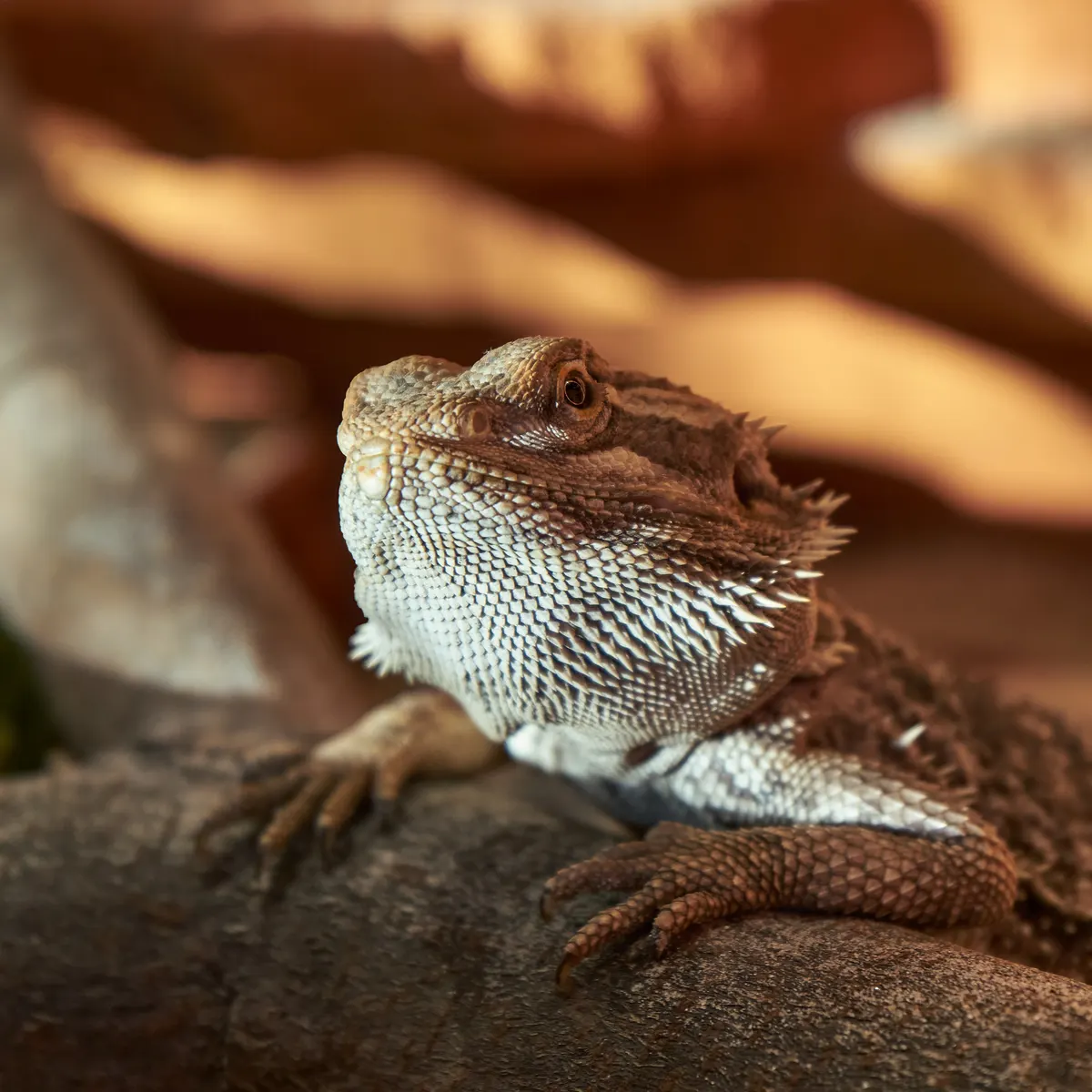
My first leatherback was a rescue, a six-year-old male who came to me with no paperwork and a name tag that just said “Spike,” which is a genuinely unfair name for a dragon whose entire deal is not having spikes. That’s the leatherback morph in one sentence: a bearded dragon with the dorsal spines smoothed out, so the color underneath reads clearer and the overall look is sleeker. What I didn’t expect, until I went looking for the actual research behind it, is that the missing spikes aren’t just cosmetic. There’s a real study showing leatherbacks lose water through their skin at a rate much closer to a fully scaleless silkback than to a classic dragon, which is the kind of thing that should change how you think about misting schedules, not just tank decor.
What exactly is a leatherback bearded dragon?
Leatherback is a morph, not a species or a color. It’s an incomplete dominant (some sources say co-dominant) trait that suppresses the raised, pointed tubercle scales down the back and sides of the body. The head spikes and the beard stay normal. One copy of the gene gives you a leatherback. Two copies, which happens when you breed two leatherbacks together, gives you a silkback: an animal with no raised scale texture anywhere, including the head.
That inheritance pattern matters if you’re buying rather than breeding. A leatherback bred to a normal dragon produces a mix of leatherbacks and normals, no silkbacks possible. Two leatherbacks bred together produce normals, leatherbacks, and silkbacks in predictable ratios. If a breeder’s price list has leatherbacks and silkbacks coming out of the same clutch, that tells you the parents were both leatherbacks, which is worth knowing since silkbacks carry real welfare tradeoffs I’ll get into below.
Color and pattern genetics run independently of this. A leatherback can be a classic tan-and-brown, a hypomelanistic, a citrus, whatever, the smooth-back trait just removes the texture, not the pigment. For the full rundown on how bearded dragon genetics work in general, our bearded dragon morphs guide covers recessive, dominant, and co-dominant inheritance in more depth, plus the specific welfare concerns around silkbacks.
Temperament: is a leatherback actually calmer?
Short answer: no, not in any way that’s been documented. I’ve seen more than one pet-info site claim leatherbacks are more docile or easier to handle than classics, and I get why the claim is appealing, less spiky texture does make them a little more pleasant to hold. But docility in bearded dragons tracks with the individual animal and how it was raised and handled early on, not with which scale genes it happens to carry. My rescue leatherback was initially a complete handful for the first month, nothing about his morph made him calm down faster than any other under-socialized adult dragon would.
What is true: bearded dragons in general tolerate handling well once they’re used to a person, some actively walk toward the glass when you approach, and none of that changes based on morph. What also doesn’t change: they’re solitary animals. Two dragons of any morph housed together, leatherback or not, will compete over basking spots and food and can injure each other, sometimes badly. If you’ve heard the idea that leatherbacks or any other “mellow” morph can be safely cohabited, that’s not supported by how bearded dragons actually behave, and it’s worth reading past the sales copy on this one.
The hydration difference that actually matters
This is the part most leatherback care guides skip, and it’s the one backed by an actual lab study rather than forum consensus. Researchers at Brock University, publishing in the Journal of Experimental Biology, measured water loss in scaleless silkbacks, partially scaled leatherbacks, and normally scaled bearded dragons held at 35°C for three hours. The silkbacks lost water fastest, as you’d expect from an animal with no scale coverage at all. But the leatherbacks lost water at a rate nearly as high as the silkbacks, despite still having scales almost everywhere except the back. The scales a leatherback does have, in other words, aren’t doing as much to prevent evaporative water loss as you’d guess from looking at one.
The same study found something else worth knowing: when given a temperature gradient from 68°F to 113°F, normal, leatherback, and silkback dragons all chose to bask around the same temperature, about 99.5°F. Neither the leatherbacks nor the silkbacks moved to cooler, water-conserving spots to compensate for their faster water loss. The researchers’ read on this is that the lizards either can’t sense the difference or simply prioritize warmth over water conservation. Either way, it means a leatherback won’t self-regulate its way out of dehydration risk. That’s on you as the keeper.
Keeper's pick: Exo Terra Mini Mister Spray Bottle, 16 oz
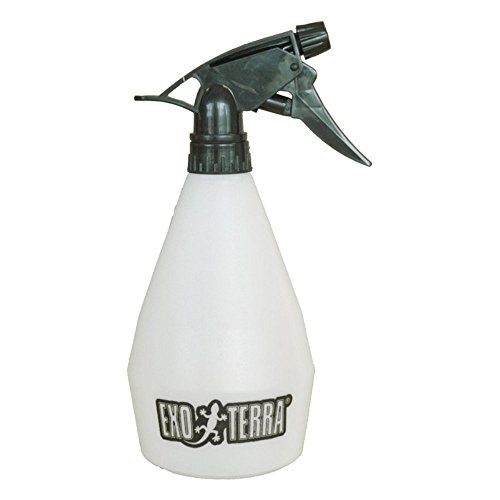
A fine-mist hand sprayer like this one is the simplest way to add the extra misting a leatherback's faster water loss calls for, a couple of light passes over the enclosure walls and basking branch a few times a week, on top of a shallow water dish your dragon can walk through if it wants. You don't need a full fogging rig for this, just consistency.
In practice this means: a shallow water dish large enough to walk through, a light misting session two to three times a week rather than the occasional once-a-month spritz, and paying real attention during shedding, since a dehydrated dragon of any scale type is more prone to stuck shed on the toes and tail tip. None of this requires raising tank humidity into tropical territory, a desert species kept at swampy humidity brings its own respiratory problems. It just means hydration is an active task for a leatherback rather than a set-and-forget one.
Does a leatherback need different lighting or housing?
Mostly no. Enclosure size, temperature gradient, and UVB needs follow the same standards as any adult bearded dragon, a minimum 4x2x2 foot enclosure for an adult (see our bearded dragon tank size guide for the sizing breakdown by age), a basking zone around 95 to 110°F, a cool side in the low 80s, and a quality UVB tube running the full length of the basking area. You’ll sometimes see the claim that leatherbacks need lower-output UVB because they have less protective scale coverage. I haven’t found actual research that backs that specifically for leatherbacks, as opposed to silkbacks, whose lack of scales is total rather than partial. Standard 10.0 or 12% high-output UVB that works for a classic dragon works fine for a leatherback. If you want to be precise about it, check actual output with a UVI meter rather than guessing from wattage, that’s good practice for any bearded dragon, not a leatherback-specific concern.
Where I’d actually spend extra attention is substrate and furniture texture. A classic dragon’s spiked scales give it a bit more resistance to minor scrapes from rough decor. A leatherback’s smoother back is marginally more exposed to abrasion from sharp rock edges or coarse substrate, so I keep an eye on the smoothness of anything my leatherback climbs over regularly. It’s a minor point, not a reason to pad the whole enclosure, just worth a glance when you’re picking furniture.
What does a leatherback cost?
Expect somewhere between $100 and $400 for a straightforward leatherback from a reputable breeder, more if it’s combined with a rarer color line like citrus or a recessive trait like hypomelanistic. That’s a real step up from the $25 to $100 you’d pay for a classic, which tracks with leatherback being a single dominant-pattern gene that’s easy to breed for reliably but still less common in the pet trade than plain normals. Price alone still doesn’t tell you anything about health, a well-kept $100 leatherback from a breeder who does fecal testing and proper quarantine beats an unhealthy $400 one every time.
Frequently asked questions
Can a leatherback bearded dragon breed with a normal one safely? Yes, this is actually the lower-risk pairing. It produces leatherbacks and normals with no silkbacks in the mix, since silkbacks only result from two leatherback-gene copies meeting.
Do leatherbacks shed differently? Not in the shedding cycle itself, hatchlings shed every one to two weeks, juveniles every couple of weeks, adults once or twice a year. But because of the faster water loss, a leatherback is somewhat more prone to stuck shed if hydration isn’t kept up, especially on the toes and tail tip.
Are leatherbacks a good choice for a first bearded dragon? Yes. Unlike silkbacks, which come with documented welfare tradeoffs around skin injury and UVB sensitivity, a leatherback’s care is nearly identical to a classic dragon’s, with the one addition of a more consistent misting routine.
The short version
- Leatherback is an incomplete dominant trait that removes raised spikes from the back and sides while leaving head and beard spikes intact.
- Breeding two leatherbacks together is how silkbacks happen, breeding a leatherback to a normal dragon never produces a silkback.
- No documented temperament difference exists between leatherbacks and classics, personality tracks with the individual, not the morph.
- A Journal of Experimental Biology study found leatherbacks lose water through their skin nearly as fast as fully scaleless silkbacks, despite still having most of their scales.
- Enclosure size, temperature, and UVB needs match a standard adult bearded dragon setup, the real adjustment is a more consistent misting and hydration routine.
- Typical price runs $100 to $400 for a straightforward leatherback, more for added color or pattern genetics.
Bottom line on the leatherback morph
A leatherback is one of the easiest “different-looking” morphs to own, since almost nothing about its day-to-day care changes from a standard dragon. The one piece worth actually acting on is hydration, that water loss finding is real research, not forum folklore, and a couple of minutes with a mister a few times a week is a small habit to build for a genuinely better-documented reason than most reptile care advice gets. For the full day-to-day routine underneath all of this, our how to take care of a bearded dragon hub walks through feeding, lighting, and temperature basics that apply regardless of morph.
For the primary research behind the hydration point, the Brock University water-loss study in the Journal of Experimental Biology is worth reading directly, and LafeberVet’s inland bearded dragon information sheet is a solid general source for the UVB and temperature baselines that apply to every morph on this list.