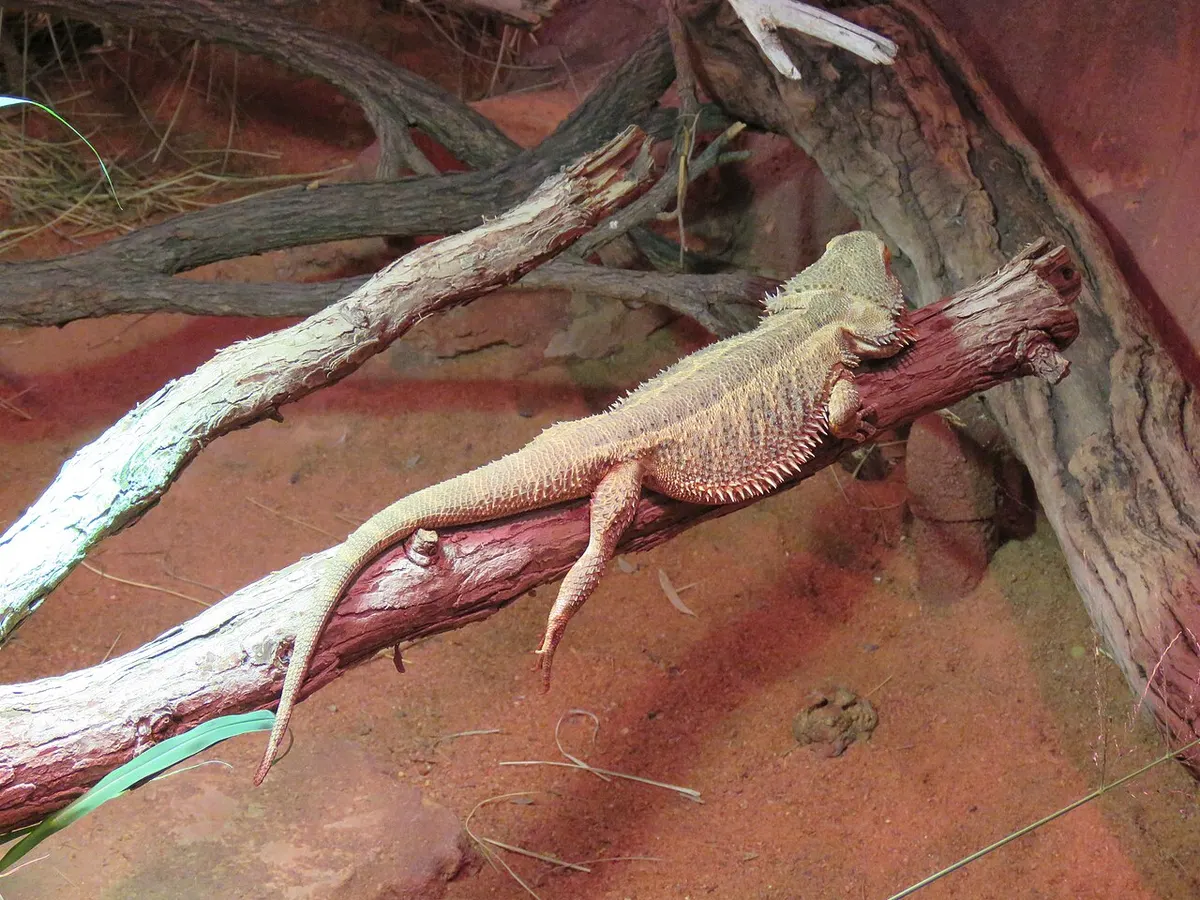
I get some version of this question every few weeks: “I want a bearded dragon, but a friend told me to get a crested gecko instead, what’s the difference?” Usually the friend isn’t wrong exactly, they just skipped the part where these two lizards want almost opposite living conditions. One wants a desert. The other wants a rainforest. That single fact decides more about which one fits your life than any personality quiz ever will.
I’ve kept both. This is the honest rundown of what each one actually costs, needs, and forgives, so you can pick the one you’ll still enjoy keeping a year from now.
Bearded dragon vs. crested gecko at a glance
| Bearded dragon | Crested gecko | |
|---|---|---|
| Adult size | Up to 24 inches nose to tail | 6 to 8 inches, including tail (or no tail at all) |
| Enclosure | 4x2x2 ft minimum for an adult | 18x18x24 inch vertical terrarium |
| Basking temp | 95 to 100°F | No true basking spot needed |
| Ambient temp | 75 to 85°F | 72 to 78°F, ideally under 80°F |
| Humidity | 30 to 40% | 60 to 80% |
| UVB | Required, linear T5 HO 10.0 | Not strictly required, low-level (Ferguson Zone 1) is a good idea |
| Diet | Insects plus leafy greens, ratio flips with age | Powdered fruit and protein diet (CGD), insects as a bonus |
| Feeding frequency | Daily as a juvenile, most days as an adult | Every other to every third day as an adult |
| Handling | Calm, tolerates daily handling well | Can be flighty and quick, especially as a juvenile |
| Lifespan | 10 to 15 years | 15 to 20 years |
| Startup cost | Roughly $630 to $1,180+ | Roughly $310 to $680 |
Those numbers are ballparks, your actual setup cost depends heavily on whether you buy new or used equipment and how nice a terrarium you want. But the gap between the two is real and it’s driven almost entirely by the bearded dragon’s lighting and space requirements.
The core difference: a desert animal vs. a rainforest animal
Bearded dragons come from the arid interior of Australia. Crested geckos come from the humid forest canopy of New Caledonia. You can’t average those two climates into one setup, and you shouldn’t try.
A bearded dragon needs a hot basking spot in the 95 to 100°F range for an adult, a cooler side in the mid-70s to mid-80s, and humidity kept low, 30 to 40%. It also needs real UVB, a linear T5 HO 10.0 bulb is the standard here, because without it a bearded dragon can’t metabolize calcium properly and ends up with metabolic bone disease.
A crested gecko wants the opposite. Ambient temperatures of 72 to 78°F, no dedicated basking bulb required, and consistent heat above 85°F is genuinely dangerous for them, it can cause heat stress or death. Humidity runs high, 60 to 80%, maintained with daily misting, according to ReptiFiles’ crested gecko temperature and humidity guide. UVB isn’t strictly required for crested geckos the way it is for bearded dragons, but a low-output UVB tube (keepers who measure it aim for a UVI of 1.0 to 2.0 at the basking branch) is increasingly considered good practice rather than optional extra credit.
Diet: bugs and greens vs. a fruit smoothie
Bearded dragons are omnivores with a diet that flips as they grow. Juveniles eat mostly insects, up to 70% of the diet, with the rest leafy greens. Adults flip that ratio, mostly greens with insects a couple times a week. You’re feeding live crickets or dubia roaches regularly no matter the age.
Crested geckos are mostly carried by a prepared powdered diet, commonly called CGD (crested gecko diet), mixed with water to a smoothie consistency and offered in a small cup. Brands like Pangea, Repashy, and Arcadia are the ones keepers reach for most. Live insects are optional rather than required, offered a couple times a week for juveniles and even less for adults, mostly for enrichment and extra protein rather than nutritional necessity.
If the idea of keeping a cricket colony alive in your house is the thing holding you back from a first reptile, that alone might tip you toward the crested gecko.
Handling and temperament: who’s actually chill?
Bearded dragons have a reputation for being the golden retrievers of the reptile world, and in my experience it’s earned. Mine tolerate daily handling, sit still on a shoulder, and generally seem unbothered by being picked up once they’re used to you.
Crested geckos are a different animal, literally and temperamentally. They’re fast, they’re built for jumping between branches, and a startled juvenile will bolt the second you open the enclosure. They calm down with regular, gentle handling, but they’re never going to be as predictably mellow as a bearded dragon. There’s also a real consequence to rough handling: a stressed crested gecko can drop its tail, and unlike a leopard gecko, that tail does not grow back. A tailless “frogbutt” gecko lives a completely normal life, but it’s not something you want to cause by grabbing at a startled animal.
Size, lifespan, and the long-term commitment
A bearded dragon tops out around 24 inches and needs a genuinely large enclosure as an adult, floor space matters more than height since they’re ground dwellers. A crested gecko stays small, 6 to 8 inches nose to tail, and lives in a vertical terrarium since they’re built for climbing, not walking.
The lifespan gap surprises a lot of first-time buyers. Bearded dragons typically live 10 to 15 years. Crested geckos typically live longer, 15 to 20 years, sometimes more. If you’re picking a pet for a kid heading into their teenage years, that’s worth thinking through, the crested gecko is very likely to outlast a bearded dragon and could still be around after they’ve left for college.
Which one should you actually get?
If you want an animal that’s out and visible during the day, tolerates handling well, and you don’t mind a bigger enclosure and a real lighting budget, get the bearded dragon. If you want a smaller footprint, lower startup cost, don’t want to keep live insects on hand constantly, and you’re fine with a lizard that’s more look-don’t-grab, get the crested gecko.
The one combination I’d steer a total beginner away from is getting a crested gecko because it seems “easier” without checking your home’s humidity and summer temperatures first. A crested gecko that’s too hot or too dry is a much harder problem to fix mid-keeping than a bearded dragon that just needs a bigger tank eventually. Match the animal to your actual house, not just your budget.
The short version
Bearded dragons need a hot, dry desert setup with a 95 to 100°F basking spot, real UVB, and daily feeding, but they’re calm, interactive, and forgiving of a beginner’s mistakes. Crested geckos need a humid, room-temperature rainforest setup with misting and no basking bulb, cost less to start (roughly $310 to $680 versus $630 to $1,180+), and outlive bearded dragons by several years (15 to 20 versus 10 to 15), but they’re faster, more easily startled, and will permanently lose their tail if handled roughly. Neither is “easier” across the board, they’re easier in different ways, and the right choice comes down to your climate, your space, and whether you want an animal you can handle daily or one you mostly enjoy watching.
If you’re still deciding, start with how to take care of a bearded dragon or leopard gecko care for beginners to see the full day-to-day picture for the two most common starter species, and check our first-time reptile owner checklist for what you need before any of these lizards come home.