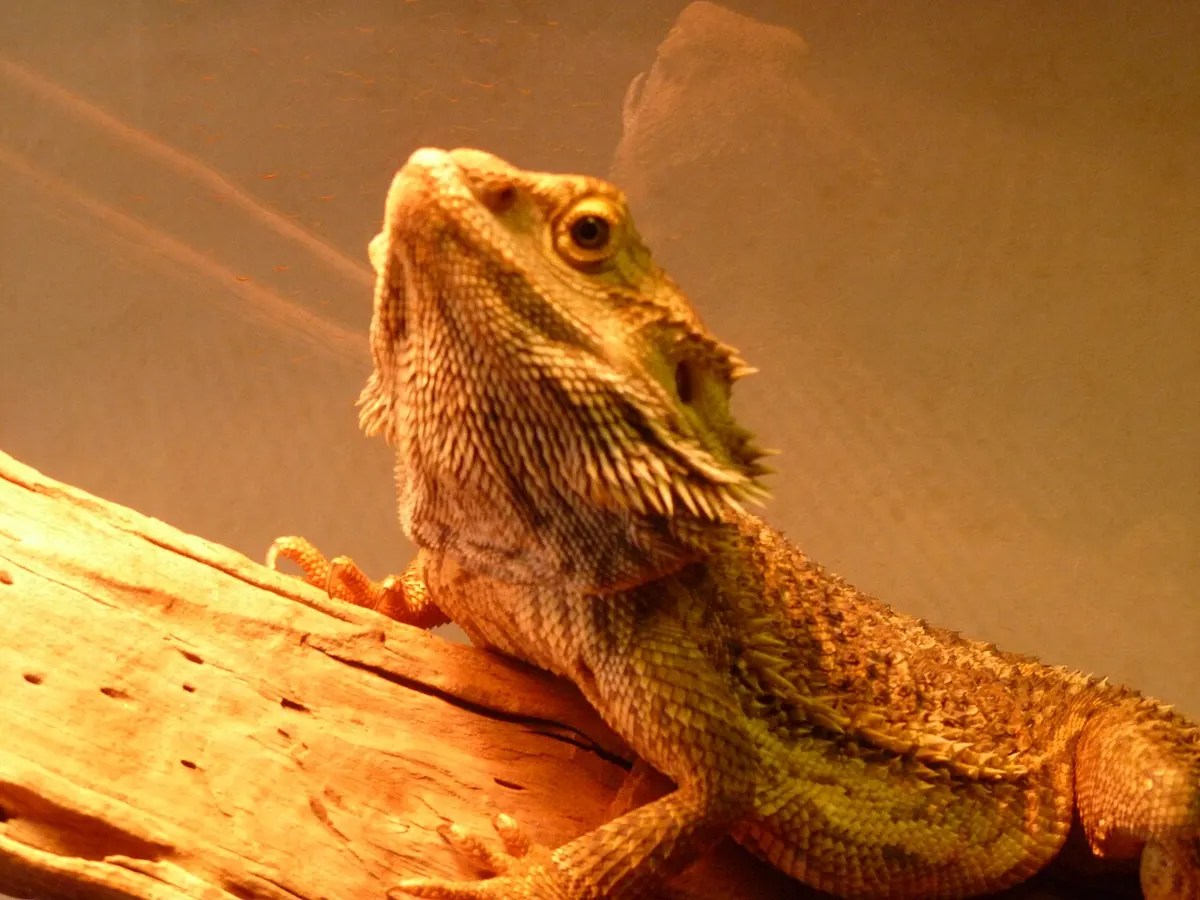
The word “impaction” gets thrown around a lot in bearded dragon forums, usually attached to a photo of a dragon that hasn’t pooped in three days and a caption in all caps. Most of the time that dragon is fine. Sometimes it isn’t, and learning to read real bearded dragon impaction symptoms instead of guessing is what separates a calm evening at home from a trip to the exotics vet. The difference matters, because treating every slow week like an emergency trains you to ignore the real ones, and that’s the opposite of what you want.
I’ve had one close call with a dragon that genuinely needed a vet, and a dozen non-events that resolved with a warm bath and a little patience. Here’s how to actually tell them apart.
What Is Impaction, Exactly?
Impaction is a blockage in the digestive tract, usually the lower gut, that stops a bearded dragon from passing stool normally. It’s not a diagnosis you make at home. It’s a description of what’s happening inside, and confirming it usually takes a vet exam, sometimes with an X-ray or ultrasound to see where the blockage sits and how bad it is.
What gets missed a lot: impaction itself is usually a symptom of an underlying husbandry problem, not a random bad-luck event. A dragon kept at the right temperature, properly hydrated, and fed appropriately sized food rarely gets impacted, even on a naturalistic substrate. The animal that’s impacted from eating a little sand while hunting is almost always also dealing with cool basking temps, low hydration, or both, which is what actually slowed digestion down enough for the sand to become a problem instead of passing through like it normally would.
Warning Signs to Watch For
Start with the baseline: a healthy adult bearded dragon on a normal feeding schedule usually passes stool every 1 to 3 days, sometimes stretching to once a week for an adult eating lightly. A baby or juvenile eating daily should be going close to daily. Knowing your own dragon’s normal rhythm is what makes a real change noticeable instead of guesswork.
Signs that point toward impaction rather than a normal slow stretch:
- No stool for over a week in an adult (sooner, within 3 to 4 days, for a baby or juvenile)
- A firm, swollen area along the lower belly that doesn’t feel like a normal full stomach
- Straining or pushing with no result, sometimes repeated over several days
- Dragging or weakness in the back legs, which can point to pressure on nerves from a blockage
- Lethargy that doesn’t match a simple food strike, paired with reduced or no appetite
- Visible discomfort when that part of the body is touched
What Actually Causes Impaction
The old advice was “never use sand, it causes impaction.” The more accurate version, backed by current reptile husbandry sources, is that loose substrate is a risk factor that becomes a real problem when something else is already off. The actual drivers:
Basking temperature too low. Digestion in a reptile is temperature-dependent. Clinical guidance puts a bearded dragon’s full preferred temperature gradient at roughly 77 to 104°F, cool end to basking area, and most care sheets (this site included) aim for the top of that range, 95 to 110°F, at the actual basking spot. A dragon basking too cool simply can’t move food through its gut efficiently, so anything swallowed along the way, sand, substrate, an oversized cricket leg, sits there longer than it should.
Dehydration. A dehydrated dragon’s colon pulls extra water out of waste to compensate, which leaves drier, harder stool that’s more likely to stall. This is one of the most overlooked causes because keepers assume a water dish in the tank is enough, when a lot of dragons barely drink from a still dish and get most of their hydration from misted greens or the occasional soak.
Prey that’s too large. The standard rule is that feeder insects shouldn’t be wider than the space between your dragon’s eyes. Adult superworms, big mealworms, and oversized crickets are the usual offenders, and their exoskeletons (chitin) don’t break down easily even under good conditions.
Insufficient UVB. Without usable UVB, a dragon can’t properly process calcium and vitamin D3, and low vitamin D3 is linked to reduced gut motility on top of the more commonly discussed bone problems.
Loose substrate, as a secondary factor. Calci-sand and other loose particulate substrates are still worth avoiding for their added risk, especially with babies and juveniles who are messier eaters and have less digestive margin for error. But treating substrate as the whole story misses the temperature and hydration problems that usually set the stage.
| Cause | Why it matters | Easy fix |
|---|---|---|
| Low basking temp | Slows gut motility across the board | Verify with a point-and-shoot thermometer, not a stick-on dial |
| Dehydration | Harder, drier stool | Regular misting, shallow soaks, hydrating greens |
| Oversized prey | Hard to pass, hard to digest | Match feeder width to space between the eyes |
| Weak or expired UVB | Impairs calcium processing and motility | Replace linear UVB bulbs every 6 to 12 months |
| Loose particulate substrate | Adds risk on top of the above | Tile, reptile carpet, or a solid liner |
Keeper's pick: Etekcity Infrared Thermometer Laser Temperature Gun

Since low basking temperature is the single biggest driver on this list, checking it directly matters more than trusting a stick-on dial thermometer that only reads air near the glass. Point this at the actual basking surface and the cool end floor for a real number in under a second.
Can a Bearded Dragon Pass Impaction on Its Own?
Sometimes, if it’s mild and caught early. A warm bath (not hot, just comfortably warm, up to about 20 to 30 minutes) with gentle belly massage in the direction of the vent can help a dragon that’s mildly backed up. Some keepers also use a drop or two of plain olive oil on the nose, which the dragon licks off, as a mild internal lubricant.
What home care is not a substitute for: a dragon that’s already showing hind leg weakness, a hard swollen belly, or that hasn’t improved after a few days of warm baths and correcting temperature and hydration. At that point you’re not treating impaction anymore, you’re delaying a vet visit that was already necessary, and delay is exactly what turns a manageable blockage into a surgical one.
Prevention: The Substrate Question
Solid substrates (tile, reptile carpet, or a paper-based liner) remove the particulate-ingestion risk entirely, which is why a lot of keepers, myself included, default to them for babies and juveniles when digestive margin for error is smallest. Adult dragons on a well-managed naturalistic substrate, with correct temperatures and good hydration, are a lower-risk situation, but “lower risk” isn’t “no risk,” and it’s still one more variable to manage instead of remove.
Keeper's pick: Zilla Reptile Carpet Terrarium Floor Liner

A solid liner takes the particulate-ingestion question off the table completely, which is why it's a common default for baby and juvenile setups while digestive margin for error is lowest. It's also just easier to spot-clean than loose substrate.
Prevention: Calcium, D3, and Gut Motility
This one gets skipped because most keepers file calcium and D3 under “bone health” and stop there. Vitamin D3 also plays a role in normal gut motility, so a dragon running low on it, whether from weak UVB or inconsistent supplementation, is dealing with one more factor working against regular digestion, on top of everything a calcium deficiency already does to overall health.
Keeper's pick: Zoo Med Reptile Calcium with Vitamin D3

A standard dusting powder for feeder insects, useful as a baseline supplement when your UVB setup is solid and you still want the calcium and D3 margin covered. It doesn't replace real UVB exposure, it backs it up.
When It’s Time to Call an Exotics Vet
I’m not going to try to diagnose your dragon from an article, and no care sheet should try either. Call an exotics vet, not a general small-animal vet, if you see any of the following:
- No stool for over a week in an adult, or more than 3 to 4 days in a baby or juvenile
- A hard, swollen belly that doesn’t resolve
- Hind leg dragging, weakness, or reluctance to bear weight
- Repeated straining with no result over several days
- Lethargy or appetite loss alongside any of the above
A vet visit that turns out to be nothing costs an afternoon and a copay. Waiting through a genuine obstruction risks a surgery that costs considerably more, and in the worst cases, the dragon’s life. If cost is a concern, call ahead and ask about exam fees and imaging costs before you’re standing in the waiting room deciding under pressure.
The Short Version
The bearded dragon impaction symptoms worth acting on are no stool for over a week in an adult (3 to 4 days in a baby), a hard swollen belly, hind leg weakness, and straining without result. Impaction itself is a gut blockage, usually caused by a combination of low basking temperature, dehydration, oversized prey, or weak UVB, with loose substrate as an added risk factor rather than the sole cause. Mild, early cases sometimes resolve with a warm soak and gentle massage, but hind leg weakness, a swollen belly that doesn’t ease up, or no improvement after a few days means it’s time for an exotics vet, not another home remedy.
If you’re still working out the basics of daily care, our complete beginner’s guide to bearded dragon care covers temperature ranges and feeding in full, and if appetite is the bigger concern right now rather than stool, Bearded Dragon Not Eating? Reasons and What to Check First walks through that separately. For UVB and heat gear that gets the basking side of this right from the start, the enclosure kit roundup is a good next stop.